
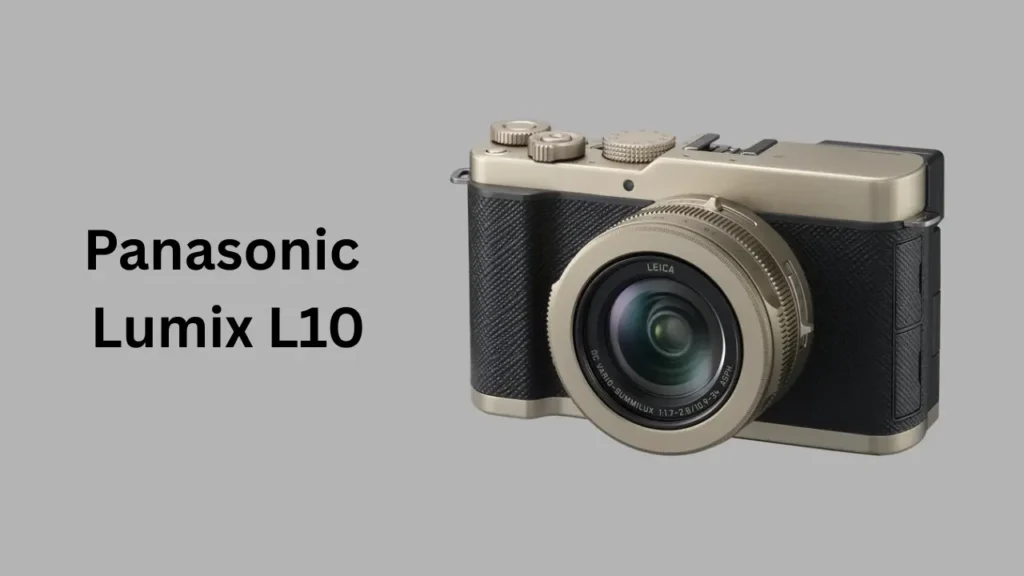
The Panasonic Lumix DMC-L10 was designed to deliver professional-level photography features while remaining accessible to hobbyists. It features a 10.1-megapixel Live MOS sensor, the Four Thirds lens mount, and one of the earliest fully articulated LCD screens on a DSLR.
The camera was developed in collaboration with Leica, making it compatible with high-quality Leica-designed Four Thirds lenses. Its combination of Live View functionality and ergonomic controls made it an attractive choice during its release. Elegant and Practical Design
One of the biggest highlights of the Panasonic Lumix L10 is its thoughtfully designed body. Unlike many DSLRs of its era, the camera features a fully adjustable LCD screen, making it easier to shoot from creative angles, overhead positions, or low perspectives.
The ergonomic grip offers comfortable handling during long photography sessions, while the well-placed buttons and control dials provide quick access to essential settings. The durable construction gives the camera a premium feel without becoming overly heavy.
Its traditional DSLR styling continues to appeal to photographers who prefer physical controls over touchscreen interfaces.
Display and Live View Experience
The 2.5-inch vari-angle LCD was considered highly innovative at the time. The articulated screen significantly improves shooting flexibility, especially for landscape, macro, and creative photography.
The camera also supports Live View, allowing users to compose shots using the LCD instead of relying solely on the optical viewfinder. This feature was relatively uncommon in DSLRs when the Lumix L10 debuted and added convenience for photographers experimenting with different compositions.
Although the display resolution doesn’t match modern standards, it remains practical for reviewing images and navigating camera menus.
Image Quality and Sensor Performance
At the heart of the Panasonic Lumix L10 is its 10.1-megapixel Live MOS sensor, capable of producing detailed images with accurate color reproduction and pleasing contrast.
Under good lighting conditions, the camera captures:
- Sharp details
- Natural skin tones
- Balanced exposure
- Rich color accuracy
- Smooth tonal transitions
The Four Thirds sensor also works effectively with Leica lenses, helping photographers achieve excellent optical performance.
While higher ISO settings introduce noticeable image noise, the camera performs well at lower ISO values, making it suitable for daylight photography, portraits, travel, and landscapes.
Lens Compatibility
A major advantage of the Panasonic Lumix L10 is its compatibility with the Four Thirds lens system.
Users can choose from a variety of lenses, including:
- Standard zoom lenses
- Wide-angle lenses
- Telephoto lenses
- Macro lenses
- Leica-designed optics
This flexibility allows photographers to expand their creative possibilities without replacing the camera’s body.
For photography enthusiasts who already own Four Thirds lenses, the Lumix L10 remains a useful addition to their equipment collection.
Autofocus and Shooting Performance
The Panasonic Lumix L10 features a 3-point autofocus system that performs reliably in well-lit environments.
The autofocus is responsible for:
- Portrait photography
- Landscapes
- Everyday photography
- Family events
- Travel photography
The camera also offers continuous shooting at approximately 3 frames per second, allowing users to capture moderate action sequences.
Although it isn’t designed for professional sports or wildlife photography, it performs consistently for general photography needs.
Manual Controls for Creative Photography
One reason photographers continue to appreciate the Panasonic Lumix L10 is its extensive manual shooting options.
Available shooting modes include:
- Program Auto (P)
- Aperture Priority (A)
- Shutter Priority (S)
- Full Manual (M)
- Scene Modes
Manual exposure controls allow users to adjust shutter speed, aperture, ISO, and white balance, giving greater creative freedom.
The intuitive interface makes the camera suitable for beginners learning photography while also satisfying experienced users who prefer full control.
Battery Life and Storage
The Lumix L10 uses a rechargeable lithium-ion battery that provides enough power for extended photography sessions under typical shooting conditions.
Images are stored on SD and SDHC memory cards, making file transfer quick and convenient. The camera supports RAW image capture, enabling photographers to perform advanced editing while preserving maximum image quality.
Advantages of the Panasonic Lumix L10
The Panasonic Lumix L10 offers several strengths that continue to attract photography enthusiasts:
- Comfortable DSLR design
- Fully articulated LCD screen
- Reliable Live View functionality
- Excellent color reproduction
- Four Thirds interchangeable lens system
- Leica lens compatibility
- RAW image support
- Easy-to-use manual controls
- Good overall image quality in daylight
- Durable construction
These features make it a practical choice for photographers interested in classic DSLR systems.
Limitations to Consider
Despite its strengths, the Panasonic Lumix L10 has some limitations compared to modern cameras.
Some drawbacks include:
- Lower resolution compared to current cameras
- No video recording capability
- Limited autofocus points
- Reduced high-ISO performance
- Slower burst shooting speed
- Older processing hardware
These limitations are expected given the camera’s age, but they may influence buyers seeking modern features.
Is the Panasonic Lumix L10 Still Worth Buying?
The answer depends on your photography needs.
If you’re looking for a budget-friendly DSLR for learning photography, experimenting with manual controls, or collecting classic cameras, the Panasonic Lumix L10 remains a worthwhile option. Its comfortable handling, excellent optics compatibility, and reliable image quality continue to make it enjoyable to use.
However, photographers who require advanced autofocus, 4K video, high-speed continuous shooting, or superior low-light performance may be better served by newer mirrorless or DSLR models.
For enthusiasts who appreciate traditional photography and already own Four Thirds lenses, the Lumix L10 still delivers a satisfying shooting experience.
Conclusion:
The Panasonic Lumix L10 represents an important chapter in Panasonic’s DSLR history. Its innovative articulated LCD, dependable Live View system, Four Thirds compatibility, and user-friendly controls helped distinguish it from many competitors of its time.
Although technology has advanced significantly, the Lumix L10 remains an appealing choice for photographers who value hands-on controls, interchangeable lenses, and solid image quality. Whether you’re starting your photography journey, building a vintage camera collection, or revisiting the Four Thirds ecosystem, the Panasonic Lumix L10 continues to offer a rewarding and enjoyable photographic experience.

